

Japan · asia
The Sad Story of the Ertuğrul Frigate
120 years before Turkey and Japan became friends on paper, a single shipwreck bound them together forever.
On a July morning in 1889, the crowds of Istanbul poured onto Sarayburnu to see off a ship most of them would never see again. The Ertuğrul — a three-masted Ottoman frigate named after the father of the empire’s founder — was about to sail 15,000 nautical miles to a country almost no one had visited: Japan. On board were 609 men. Fourteen months later, 527 of them would be at the bottom of the Pacific.
This is the story of a diplomatic voyage that ended on a rock, and of the friendship it accidentally forged.
A Gift for the Emperor
The idea began two years earlier, when Prince Komatsu Akihito — the first Japanese royal ever to visit Istanbul — was received by Sultan Abdülhamid II. The Emperor Meiji responded by sending Abdülhamid the Grand Order of the Chrysanthemum. Diplomatic etiquette demanded a return gift delivered by an Ottoman ship.
The Ottoman Empire of the 1880s was looking for friends far from Europe. Britain and Russia were carving up its borders; a rising Japan, half a world away, looked like a natural partner. A warship flying the crescent flag at the head of the Pacific would be a statement — not just to Tokyo, but to the Muslim communities along the way, from Bombay to Singapore, that the Caliph still had a navy.
The ship chosen was the Ertuğrul.
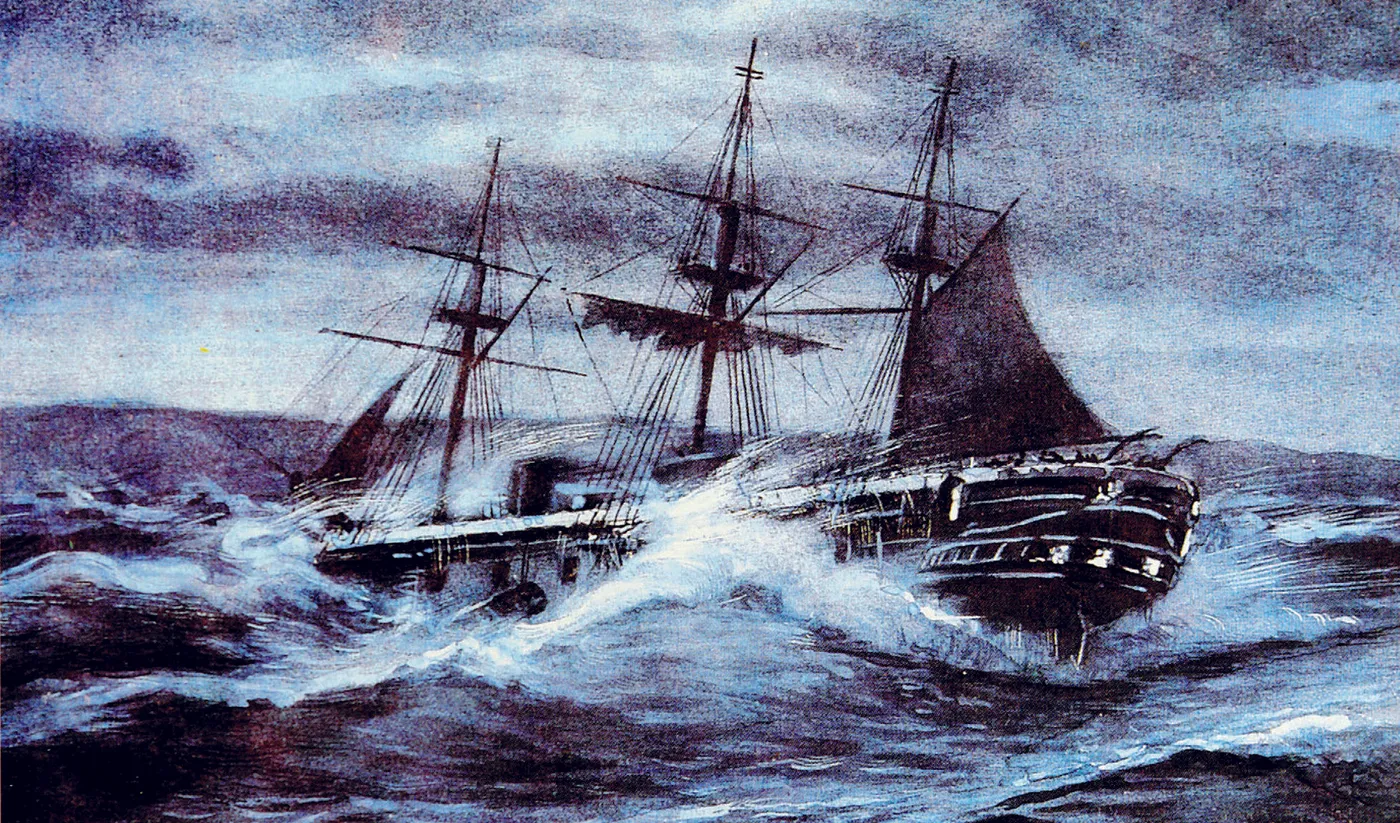
The Ship
| Length | 76.3 m |
| Beam | 13.3 m |
| Draft | 6.2 m |
| Displacement | 2,344 tons |
| Average speed | 10 knots |
| Coal capacity | 350–400 tons |
| Built | Tersane-i Amire (Golden Horn Arsenal), keel laid 1855, commissioned 1864 |
A technical commission had surveyed her a year before departure and declared the hull “excellent” and her boilers “good for three to four more years of service.” Others were less sure. Several officers argued openly that a wooden sailing frigate was the wrong ship for the Pacific. The mission went ahead anyway. Command went to Ali Osman Bey — who would be promoted to Rear Admiral mid-voyage and become Osman Pasha — the son-in-law of the Minister of the Navy.
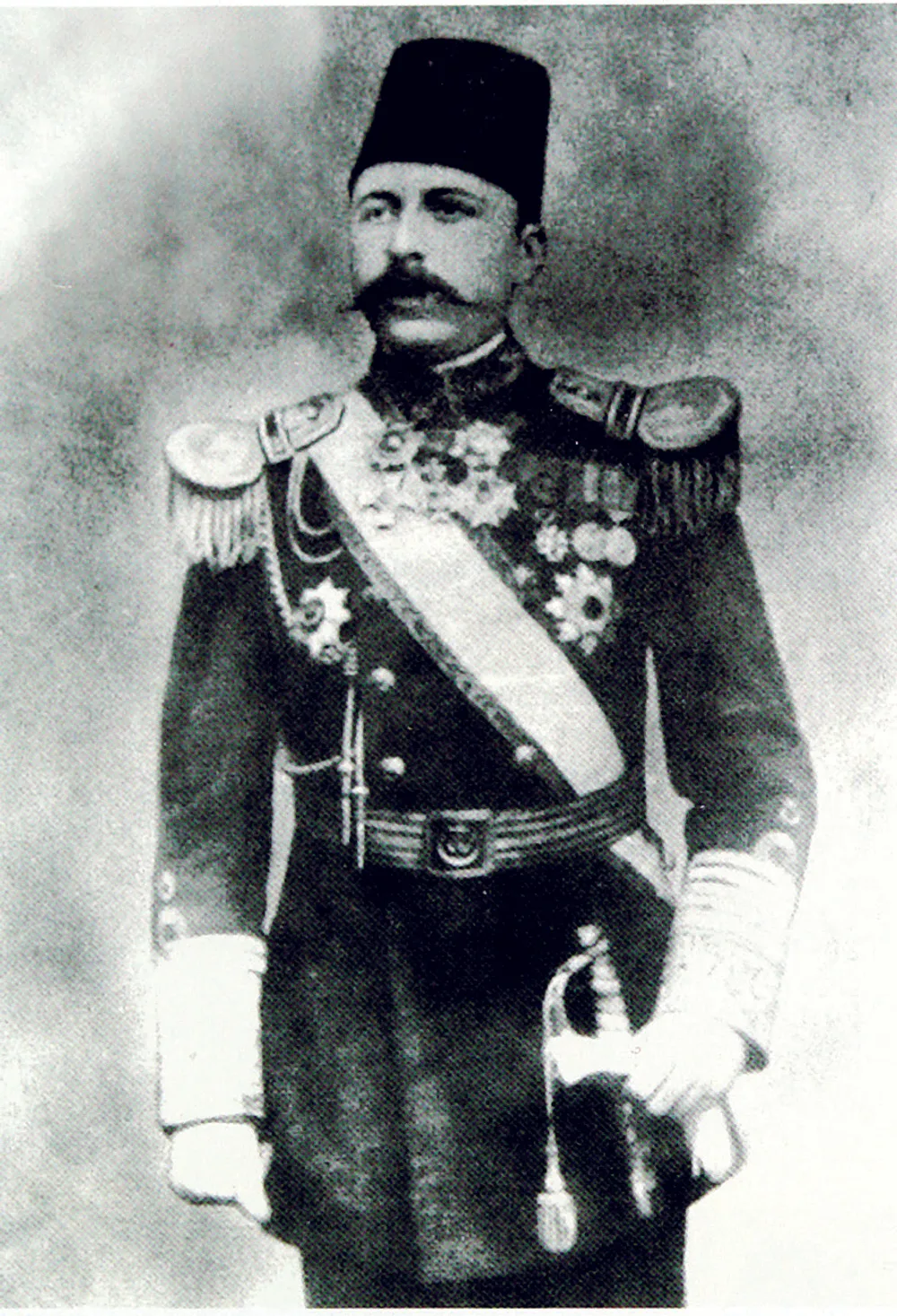
A Journey the World Watched
The Ertuğrul sailed on 14 July 1889. Almost immediately, she ran into trouble. In the Suez Canal her rudder post snapped in the wind, forcing a repair that lost the expedition its summer window. From there, the ship crawled east through Port Said, Jeddah, Aden, Bombay, Colombo, Singapore, Saigon, and Hong Kong — often delayed for weeks waiting for coal, weather, or money.
Wherever she went, local Muslims treated her arrival as a minor holiday. In Bombay, 20,000 people came aboard in a day; by the end of the week, 150,000 had seen her. In Singapore she was stuck for four months. Indian and Malay newspapers ran weekly updates. To the imperial powers watching from London and The Hague, the visible loyalty of their subjects to a distant caliph was deeply unwelcome.
“On Friday, 150 officers and men of the frigate, neatly dressed, went to the mosque to pray. On the way, a vast crowd saluted them with the deepest respect.”
— Advocate of India, 29 October 1889
Tokyo, Briefly
The Ertuğrul finally dropped anchor in Yokohama on 7 June 1890 — almost a year after leaving Istanbul. Osman Pasha was received by Emperor Meiji. He presented a gold-embroidered silk cloth (199×197 cm), a medal, and gifts that still sit in the Japanese Imperial Collections. In return, the emperor bestowed Japan’s highest honour for a foreigner.
The business of empire done, the ship began preparing for the voyage home. By September she was ready. The monsoon season was not.
The Typhoon
On 15 September 1890, the Ertuğrul sailed from Yokohama despite warnings of a typhoon closing in from the south. By the following evening the wind was at gale force. Her engines ran at full power; her sails came down; it made no difference. Mountainous waves pushed her steadily north-northeast, toward the jagged southern tip of Oshima island at Kashinozaki, Wakayama.
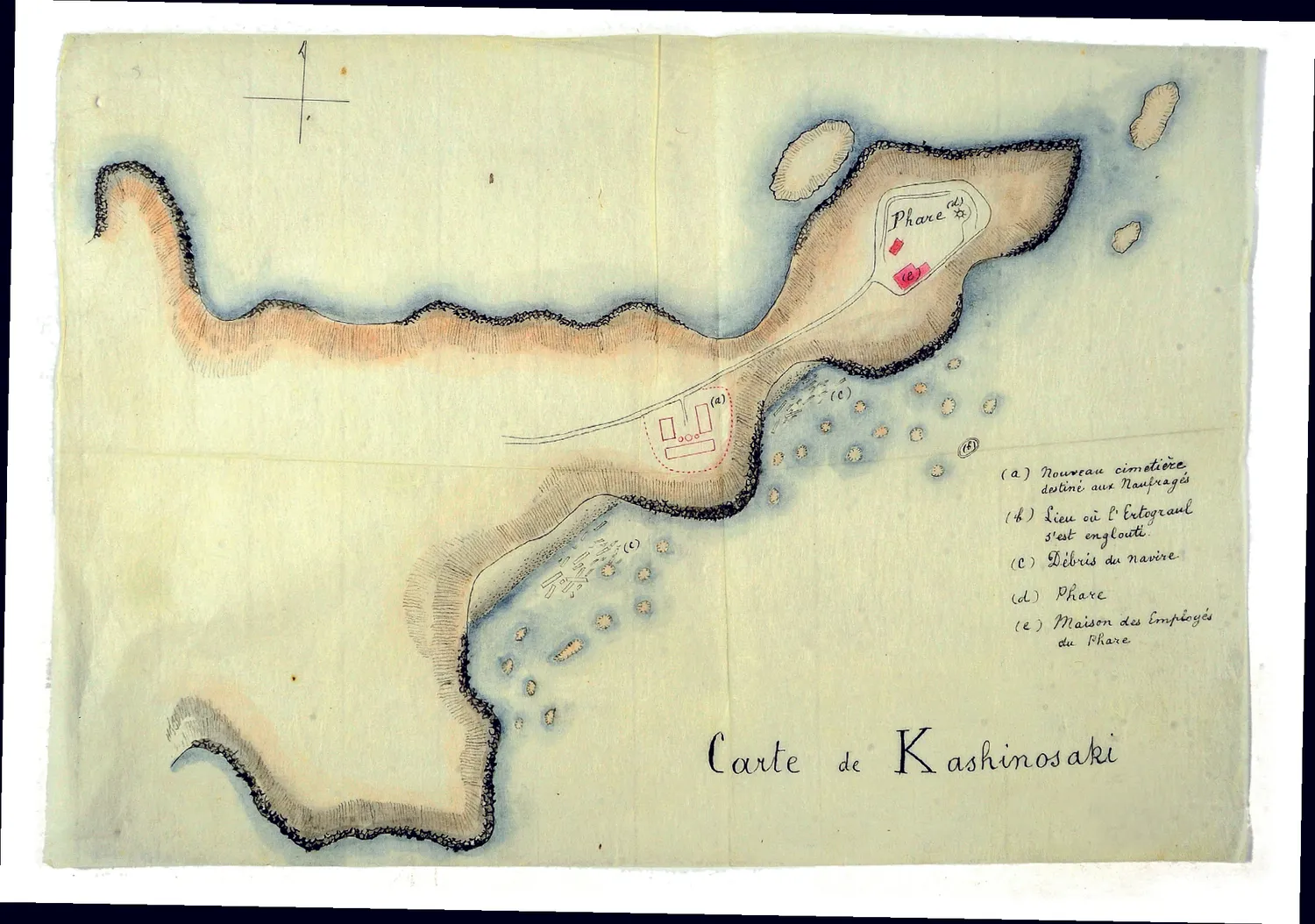
At around 21:00 on 16 September, the Ertuğrul struck the Funakura rocks. Her boilers exploded. Within minutes the ship broke up in the surf. Of 609 men who had left Istanbul, 13 had already died of cholera during the voyage. Another 527 — including Osman Pasha — drowned or were killed on the rocks that night.
Sixty-nine survived.
The Villagers of Kashino
They survived because of the fishermen of Kashino. The village had 400 people. When the first survivors washed ashore, the villagers carried them to their homes, stripped them of soaked uniforms, gave them dry clothes, and warmed them with their own body heat. When food ran low — it was the end of a hard season — they gave the sailors the chickens they had been saving for winter.
A telegram reached Tokyo the next morning. The German warship Wolf, in port at Kobe, was the first to sail. Her doctor and officers took 65 wounded men aboard and delivered them to a hospital in Kobe where the emperor’s own doctors were waiting. Meiji ordered two Japanese warships, the Hiei and Kongō, to carry the survivors all the way back to Istanbul — a voyage of months. They arrived on 2 January 1891.
An Accidental Friendship
In Japan, the disaster did something the diplomacy had not. Newspaper appeals raised money for the widows of the crew; a young journalist named Torajirō Yamada travelled to Istanbul to deliver the donations personally and ended up staying for twenty years, teaching Japanese to the Ottoman military academy. Donation drives continued for generations. Schoolchildren in Kushimoto visit the Ertuğrul memorial each year on 16 September.
In 1985, during the Iran–Iraq war, Saddam Hussein gave foreign nationals 48 hours to leave Iraqi airspace before Iranian cities would be bombed. Two hundred and fifteen Japanese citizens were stranded in Tehran — their own government could not reach them in time. Turkey sent two Turkish Airlines planes to evacuate them, leaving its own citizens behind to drive out overland. The Turkish ambassador’s explanation was brief: “We remember the Ertuğrul.”
A Note on Words
The historian Erdoğan Şimşek, writing in 2005, pushed back gently on one Turkish habit — calling the sinking a facia, a catastrophe.
“Every shipwreck is not a catastrophe. The Ertuğrul suffered an accident at sea. To carry a flag across the oceans, to show a nation’s colours in distant waters, is never as easy or as cheap as it looks.”
The Ertuğrul did what she was sent to do. She showed a flag. She was received with honours. She failed, in the end, only to come home.
That she is remembered at all — a hundred and thirty-six years later, in schoolbooks on both sides of the Pacific — is the accidental proof that she succeeded.
The Ertuğrul Memorial Cemetery stands on the cliff at Kushimoto, Wakayama Prefecture. The memorial was visited by the Japanese Emperor in 1929 and rebuilt in 1937. A replica stands in Mersin, its sister city in Turkey.